Saturday, April 16, 2011

Day 6 - Prague

Our busy day began with Holocaust survivor Pavel Stransky, our dear friend, who told us his "Holocaust Love Story."


Kasandra says. . .Today our group met with 90 year old Holocaust survivor Pavel Stransky. He explained to us the story of his past and how love and hope helped him all the way to survival. This story of fear, torture, but also love really touched me and brought me to the conclusion that Pavel is not just a man with many stories, love and hope, but he is a man with SOUL! It really opens my eyes to how much we take for granted and persuaded me to now say that LOVE is the most important thing in life! Thanks Pavel!


Sarah S. says. . . love, rejection, loss, love re-found. The telling of Pavel's story and his verbal visuals created an emotional and nostalgic atmosphere in which I remembered my history--my grandfather's story and the story of my connection to the importance of remembering.


The students were very moved not only by his story, but by his willingness to share his entire day with us at Theresienstadt.

Casey says. . .At Theresienstadt we walked through the tunnels used by soldiers during World War II for a quick escape from the concentration camp. Inside the tunnels was dark and scary --- you never knew when there was a turn coming up or if you were going to walk into a wall. Exiting the tunnels hit me hard, though, because at the end of the tunnels was where prisoners were executed by firing squad, electric chair or were hanged.


Jordan says. . .Today at Theresienstadt [the work camp], we took a walk through the underground tunnels which were used by Nazis soldiers to travel around the camp quickly. When we came out of the tunnel, the first thing we saw was a small area where Nazi soldiers did shooting drills, but it was also where many of the executions happened. Before the prisoners were killed they had to decide how they were going to be executed; either by electric chair, firing squad or being hanged. I cannot imagine having to make such a horrible decision because the outcome of my choice that was made would be the same: life-ending.

Lilibeth says. . .In Terezin at the Magdeburg barracks where art, music and literature were displayed, I felt all six million Jews and their stories. In some complex way, music and art express what words often can’t; it shows a different side of people and that side is real and hurting but in a way that gives understanding and clarity. The pictures showed a mix of emotions - despair yet also hope. It gave me a clearer understanding of the Holocaust through an artistic viewpoint. Everything is more vivid, live, real; not so black and white when you feel it all around you, as if walking in their shoes. Nothing will be the same again.

Saidie says. . .When entering Thesienstadt, the pain and suffering of the victims struck me, every aspect, building, room, left me with tears in my eyes and pain in my heart. One feature that affected me the most was the underground tunnel, turning and winding in darkness only providing little light to see. The walk through felt about 30 minutes to an hour long when in actuality it was only 10 minutes, exiting to the location of Jews and other prisoners being shot by the firing squad, hung, or electrocuted. The intensity, despair and depression of the sight was and will remain astonishing.

Jessica says. . .It’s amazing how during the Holocaust sheer humanity was disregarded. Going through the Terezin Ghetto Museum that displayed the artwork of children and others made me realize how much the Nazis didn’t care. They didn’t see the Jews as talented people who played instruments, sang, or painted. They were numbers and nothing more.


Mackenzie says. . .As we entered the Theresienstadt concentration camp, I had the unique privilege and opportunity to sit on a bench with Pavel while we discussed the emotional effect of his revisiting the site that took so much away from him. When I said, “This is so crazy, seeing the camp,” he quickly responded, “People are crazy.” Though such a simple statement, these words say so much. People truly are crazy -- the human mind is capable of virtually anything, yet it is up to the individual to decide just how crazy they will be. This remarkable man also said that “one cannot survive without hope –without hope we are dead.” These words deeply touched me, for I have endured my own personal hardships in which the only thing I had left was hope. Pavel Stransky is a lovable, generous and wise 90 year old man who has forever touched my life.

DaiQuan says. . .The quote that touched me the most was when Pavel said “You must have hope. Without hope things die.” It made me understand that if you want to see good things happen in your life, you must have hope.

Reagan says. . .Tears. A man about five foot three inches tall inspired me to tears with his story. His strength to even recount such a darkness is as surreal as the experience he endured. Pavel Stransky could move mountains with his words.


The walls display many works of the talented musicians, artists, and writers who were kept here.

Celina says. . .The Terezin Ghetto motto of "I'm alive as long as I am creating" struck me as a clear echo of what really transpired in the ghetto. The artistic beauty that emerged from t he ghetto seemed absurd to me because i never understood how this beauty could thrive in such an environment. But with this saying, I am able to more fully grasp the meaning behind the art, music and culture of the Terezin Ghetto

Michelle says. . .Pavel preached about the importance of love in one's soul. If a man that experienced such great hardships and still believes in love and life than there is no excuse for anyone to not. After Pavel's story, all my personal struggles seemed to dissipate. After putting everything into perspective, I realized that if you are still breathing at the end of the day, it is a good day.

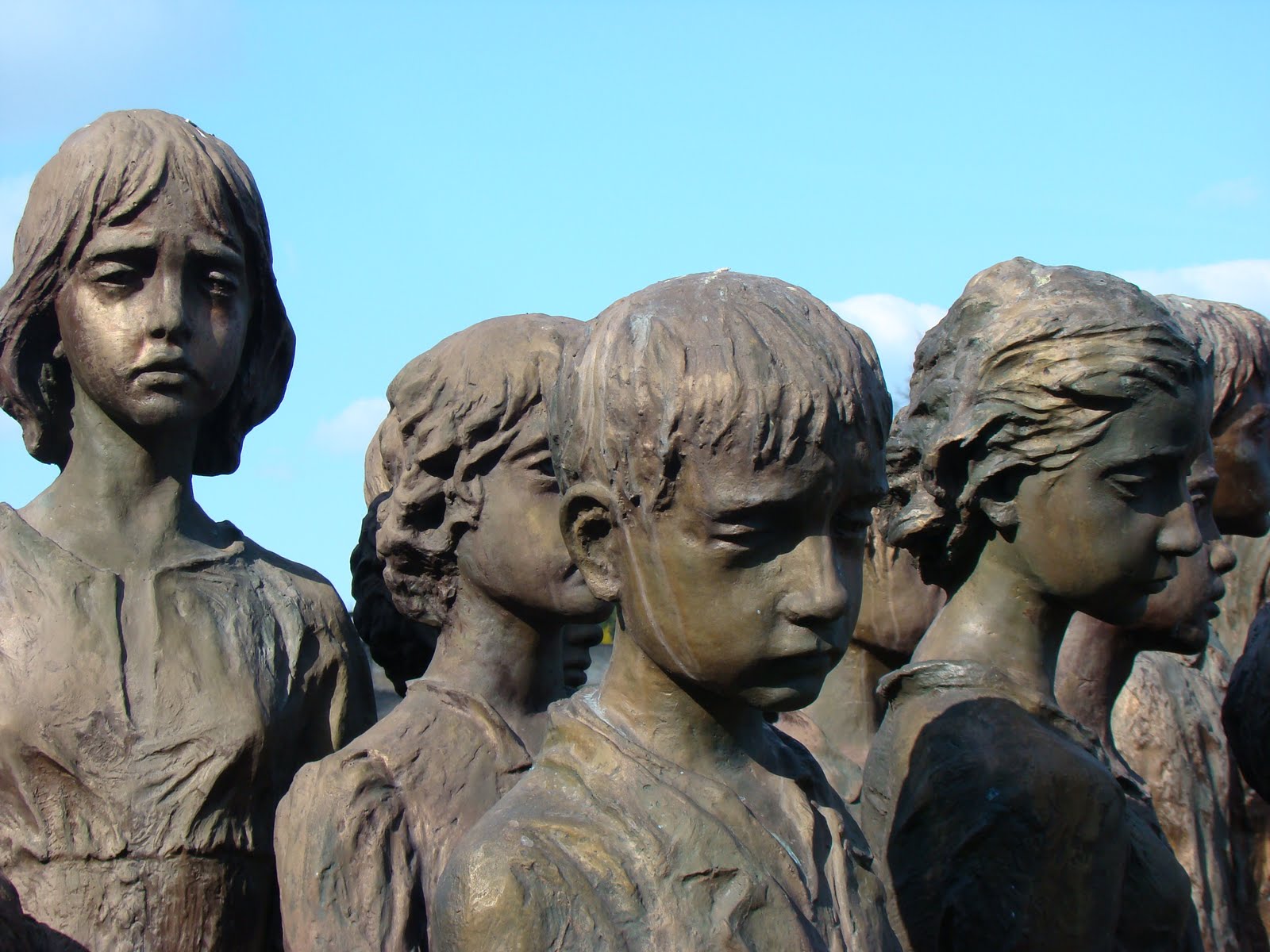
Ashley says. . .We visited the Lidice Memorial and saw the memorial to the 82 Czech children who were murdered by the Nazis. I saw 82 different children, 82 different faces, 82 different voices all asking the same question, Why me?

Greg says. . .Lidice was truly beautiful today, yet that beauty was not enough to mask the truth of what happened there. On that beautiful plot of land are 82 statues of Christian children who were put in gas chambers by the Nazis.


Cherilyn says. . .As I stood in Lidice and I looked over the open land where the town once stood I couldn't believe how such atrocities could have happened in a place of such beauty.


Shalmi translated a Hebrew diary entry by Czech composer, pianist and conductor of Raphael Schachter, that captures the complexity of life here in Theresienstadt:Today milk froze in the pot. The cold is very dangerous. The children do not take off their clothes and the lice multiply in the teenagers' dwellings.

There is the premiere of “The Bartered Bride." The presentation was the most beautiful I have seen thus far in the ghetto.

My sister Minsi whose husband died in the fortress, is summoned with her children to the transport. I will appeal, but will I be successful? If not, what will I say to her? Minsi will surely be cross with me. My uncle is also on the reserve list for the transport.

My quarters where I live are getting nicer and nicer. One should see a woman's hand [meaning he had a new girlfriend].


This photo shows Shalmi translating from Schachter's diary.


Theresa says. . .Being in the Terezin today I have never felt more uncomfortable and more interested in my life. It was such a mix of emotions just thinking about what happened there and I think it will definitely impact how I view the world in the future.

Francesca says. . .I remember talking to Mrs. Bauman and I had asked her why they had a pool in the Small Fortress in Terezin. She told me that the head officer would sometimes use it but when it was empty it had a different use; they used to put fathers and sons in there and force them to fight until death all for an extra piece of bread. Then I thought of how pools today are used for pleasure and that during the Holocaust they were utilized as a weapon of devastation. I don't think I will ever be able to look at a pool the same way again.

Deanne says. . .Pavel Stransky's story really moved me today and going to Terezin with him made the day even more special. In particular, what we saw I the Small Fortress, solitary confinement cells, false sinks which never had water and the places where people were murdered really sickened me.


Sammy says. . .Pavel Stransky's story truly moved me and brought me to tears. Looking at this 90 year old man and his strength and courage to carry on with his life as well as educate others really had an impact upon me. Hearing a survivor story first hand really brought me back in time and caused me to think about my life and how I will look at things differently after hearing Pavel.

Sarah P. says. . .The Holocaust gave chances to some while it took them away from others. The Nazis were given the chance of control which almost completely destroyed the Jews' chances to live. By telling their story, those who survived offer the chance for humanity to change- the chance to distinguish the paths of progress from those that lead to evil.


Brenton says. . .Toward the end of Pavel's testimony he asked “What is the most important thing in life?” He responded by saying “the love between a man and a women is the most important thing in life.” I connected his closing theme to family because after reflecting on his story and my own life, I realized my family would always pull through and be there for me, just like his wife was for him.


Nick says. . .No longer a person, just a digit. In front of the Terezin Concentration Camp lie fields filled with graves of those who died. Many of the tombs had only a number. No name. No epitaph. Simply a digit. It is the ultimate stripping of identity: suppressing one's religion, isolation of person's into a camp and the deletion of one's name.


Tonight we rode the funicular up the hillside to our restaurant overlooking the magical city of Prague.

Friday, April 15, 2011

Day 5 - Prague


After a late night of Skyping with New Milford High School, we slept soundly, and woke up to our first full day in the beautiful city of Prague. We began the day with our guide Kamila and Shalmi walking with us to the Jewish Quarter, located just off of the Old Town Square.

Shalmi told us about the Old New Synagogue, built in the thirteenth century.


Once the synagogue of the famous Rabbi Loew, which shows the gothic architecture, and to this day has the remains of the legendary Golem in the attic.


After learning about the Jewish culture of Prague in the Jewish Museum, Shalmi talked to us about the entry of the Nazis into Prague. One of their first acts was to make all Jews register. Unknowingly, they were aiding the Nazis in making lists in order to round them up to deport them at a later date.


Following this, we entered the Pinkas Synagogue, which today is a memorial to the 88,000 Jews from Bohemia and Moravia who were murdered in the Holocaust. The walls of this moving memorial are covered with the names of each of the victims. Each of the towns in which Jews lived are listed, alphabetically, and then the names of the victims from each town are listed, with their date of birth and date of death. All of the names have been painstakingly hand-painted and cover the walls on the three floors of the museum.


After leaving the Pinkas cemetery, we entered the old Jewish cemetery where Jews had been buried from the 14th century through the 18th century. As was the custom, given the limited space for burials, graves were dug one on top of another so that the Jewish cemetery has between twelve and fourteen layers of graves, which explains why the headstones are so close together and appear to be placed haphazardly and askew.


For lunch, we ate pizza and salads near the Jewish Quarter, then continued with our tour in the Spanish Synagogue. Built in 1868, one year after the Jews of Prague became citizens, this ornate synagogue reflects their pride in their elevated economic and social status.

Since we were not allowed to photograph inside, click this link for photos.


After a lovely pasta dinner, we returned to the hotel to debrief, and plan to get a good night's sleep to prepare for our very special day with Holocaust survivor Pavel Stransky.


Thursday, April 14, 2011

Day 4 - Berlin to Prague


Our busy day began late due to a traffic jam in Berlin due to the NATO meeting held here this morning. We visited the Jewish Museum of Berlin, which was designed by architect Daniel Libeskind.

To view pictures of the museum and its architecture, click here.


Shalmi spoke to us about a theme of Liebeskind involving "voids"--a term that signifies the absence of something that once was present. To Liebeskind, his architecture in this museum shows the absence of Jews in Europe after the Holocaust. Shalmi again spoke of the one-sided love affair and the love that Jews felt for Germany before the Holocaust. He said that Germany,as does a former lover, jilted the Jews, and dumped them, completely rejecting the one-sided love the Jews felt for their country. For Shalmi, this museum poses one question - does Germany miss the presence of Jewish culture in German society? Is there lack of presence felt as a void by modern German society?

We looked extensively at the history of antisemitism in Europe. Two statues personify the Church, Ecclesia, and the Judaism, Synagogue. These depictions illustrate the antisemitism through the blindfolded Synagogue holding a broken lance.


One of the exhibits within the Jewish Museum is called "Fallen Leaves." The video above shows us walking on the steel faces which represent Jews whose lives were lost during the Holocaust.


After our four hour train ride from Berlin to Prague, we ate dinner at a beautiful, Czech restaurant with traditional Czech entertainment.

Theresa says . . .

Today we visited the Jewish Museum and one exhibit really stood out to me. The exhibit “Fallen Leaves” was really different, but it had so much meaning behind it. In one of the “voids” of the museum was a dark hallway with thousands of steel faces carved out that covered the floor. At first I didn't realize what they were until Mr. Barmore told us to walk on them. I went reluctantly and felt really uncomfortable walking on faces that symbolized Jews who died in the Holocaust. The noise was also so loud which made the experience even more eerie. The more I thought about it, the exhibit being called “Fallen Leaves” almost made the exhibit seem unimportant. As we all know, leaves fall every year, and it's a natural thing that we almost look forward to. With an exhibit signifying the Jews who died in the Holocaust being called “Fallen Leaves,” it makes the Holocaust seem like a natural thing that happens a lot. It is the total opposite. The exhibit made me feel uncomfortable but it also evoked so many emotions that I didn't know I could get out of one single exhibit.

Kassandra says . . .

While in the Jewish Museum, our group visited the exhibit “Fallen Leaves.” This being one of the “Voids” really created a lot of emotion for me. Right when we had walked into the room, which was basically a hallway with steel faces covering the ground, I got hit with a feeling of sadness and guilt. I had these two emotions because of the opportunity of being able to walk across the hall. When everyone was walking you can hear the loud clinging sounds of the steel. But to me, it was something different. When walking across with the others, I was trying to be so careful as to not step hard on these faces. As I continued walking slowly, I could hear the loud clinging sounds getting louder, but to me, that sound wasn't just metal being stepped on. To me, it was the sound of peoples' cries and screams of being tortured, and their spirits stepped upon. Because of this feeling of disrespect and guilt, I began to get very emotional, just about at the verge of tears. It was and still is amazing to me how one simple exhibit or memory can touch someone so much!


Nick says . . .

Today, in the Jewish History Museum, we found ourselves confronted with an art exhibition representing a void -- a void that supposedly represented the hole in German society created by the vast numbers of Jews lost during Hitler's reign. Previously, when speaking of the ardent Jewish desire to assimilate into German society throughout history, Shalmi remarked that the relationship between Germany and the Jewish community was like an unrequited love. During the Holocaust, it was as if Germania, the female symbol of Germany, sadistically attempted to end the relationship forever.

Following the Holocaust, one needs to look at Germania and her feelings: did she feel satisfaction that the removal of the Jews [in their one-sided love affair] had nearly been accomplished? Or did she truly feel a void in her life by the loss of her lover?
It is a vital question when evaluating the modern, "new" Germany: are the "missed" Jews really missed by Lady Germania? Does she truly feel guilty for her cruel deeds? Or is she simply putting on a facade of guilt in an attempt to make herself appear more kind in the eyes of others? All are questions that can apply to Germany today, but only time will reveal the true sentiments of Lady Germania.

Wednesday, April 13, 2011

Day 3 - Berlin

Today began with Steve Conner (HST Alum from '08) meeting us at our hotel. Steve is studying abroad in the Netherlands and took a train in yesterday to join us for a few days. Our first stop was Grunewald Train Station, the site where many Jews of Berlin were deported to concentration camps that included Theresienstadt and Auschwitz. This memorial shows the dates of deportation, the number of Jews deported and the camp to which they were sent.


This memorial was commissioned by the German Railway to address their role in the Holocaust. Students viewed this memorial in the drizzling rain.


From here, we went to the New Synagogue, which was opened in 1866. The architecture resembles the Alhambra in Grenada, Spain, with its Moorish architecture.


Outside, Olaf pointed out to students the memorial stones that are embedded in the sidewalks throughout Berlin which they had not noticed.


These stones commemorate the Jews who lived in Berlin, and tell what date and where they were deported, and their fate.


These four stones commemorate the Schneebaum family, and are located outside the apartment building where they lived before they were deported. They all died at Auschwitz.


After lunch, we walked to the Rosenstrasse Memorial.


This site recognizes the brave Christian women, whose Jewish husbands and children were arrested during the Factory Action, in February of 1943, when the Nazis swept through Berlin in their efforts to make it "Jew Free". These women, whose husbands and children were being kept in the former Jewish Community Center on Rosenstrasse street, stood outside in an unarmed, quiet protest, demanding the release of their families. Despite Nazi efforts to make them go away, they did not give up, and Joseph Goebbels, the Minister of Propaganda decided to release them to prevent a public relations nightmare and prevent additional protests.


We spent the next two hours in the Otto Weidt Workshop for the Blind. In this factory, the blind and deaf employees made brooms and brushes out of horse hair and pig hair. Otto Weidt also employed Jews here. Otto used the Berlin Work Act to legally keep employing his Jewish workers during the war.


Otto protected his Jewish employees by hiding four members of the Horn family in a secret room built behind a wardrobe closet. Inside the false back wall of the wardrobe, behind clothing, was an opening into the room where the Horns would sleep at night and hide during Gestapo inspections. After eight months of hiding, the Horn family was betrayed and deported to Auschwitz, where they were all murdered.


Our guide explained to us how Otto Weidt helped hide Inge Deutschkron, who is the survivor who preserved and documented the rescue efforts as a tribute to the memory of this heroic man.


We ended our day at a new exhibition and memorial for the Berlin Wall which came down in 1989, leading to the reunification of the city of Berlin. Shalmi spoke to us about how many of the students' parents would remember this history very well, and also explained the Cold War and how East Germany had decided to build the wall in 1961 after 2.8 million residents of East Berlin had fled to the democratic West, to prevent further emigration which was an embarrassment to the East German government.


Student reflections...


Deanne says...


Grunewald train station had a big impact on me. While I was standing there, I was thinking how a train is an everyday transport to work or a vacation. It is supposed to be something happy. Well, that’s also what the Jews had in mind. Before the Holocaust, they went on with their everyday lives, traveling on trains. They didn’t know, however, where this train was taking them. This trip had not been planned by them and had an uncertain destination. It makes me think about my travels and where my transportation takes me and for what purpose.


Ashley says . . . .


We just left Grunewald train station from where many of Berlin’s Jews had been deported. The train cars were not cattle cars so the Jews were not crammed together; they were almost filled with a false hope, I feel, because conditions were not as bad as they could have been. Standing on the platform and reading the numbers of people who were just like me, made me think really deeply. I just keep picturing and imagining myself standing on that platform where a mother stood with her daughter. I keep seeing my mom next to me, holding my hand, checking to see if my sisters, brother and I were okay; holding my hand waiting to board the train that will take us to an unknown destination, with a smile hiding her own fear so we would not freak out. I can’t even begin to fathom how the Jews really felt because even just trying to imagine the experience of standing there with my family filled me with fear and brought me to tears.

Otto Weidt’s Workshop for the Blind really hit home for me. My best friend is blind and seeing how Otto Weidt had the heart, as a non-Jew, to save Jews who were not only hated for being Jewish but also because of a disability they could not have prevented. Throughout the workshop tour I pictured Shafeka walking around back and forth between the rooms and the expression of security on her face, knowing that Otto Weidt was there to take care of her and protect her. I tried to imagine her sitting at the desk, making brushes with the machines, that were simple enough to figure out without Braille.

Tuesday, April 12, 2011

Day 2- Berlin

On the bus ride to a modern memorial in the Bavarian Quarter of Berlin, Shalmi lectured about the background of Nazi Ideology. He explained that it is based on science of the 19th century, when scientists like the German Humboldt brothers and Charles Darwin began asking the question, "How (empirically) do things happen in the world?" Their theories about species and the survival of the fittest were the impetus for later sociologists and scientists to link their theories to racist theories. When all of these ideas mix together, and the Nazis apply them to the Jews, then they label Jews as racially inferior.

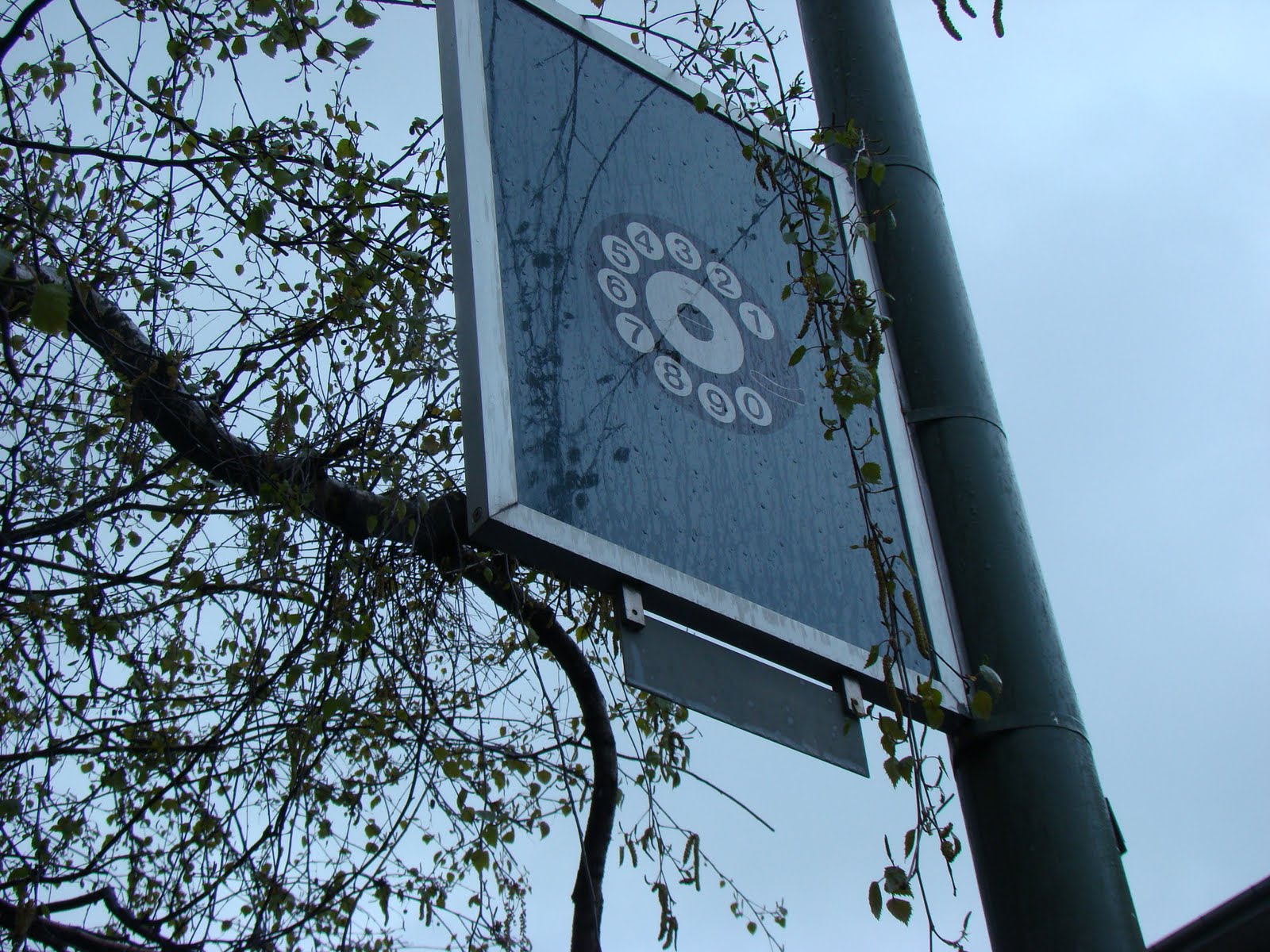
Shalmi Barmore gives insight to the students at the Bavarian Quarter Memorial. Once at the Bavarian Quarter, a neighborhood of Berlin where Jews once lived, we viewed a modern memorial which consists of signs with pictures on one side and anti-Jewish laws or rules on the other. Shalmi led a discussion in how some of these laws came from the top down--such as "Jews can't use public telephone booths"-- and some came from the bottom up--such as "No Jews are allowed to sing in choirs." It is important to realize that the Nazis set some laws in place, but community members in Germany also made their own anti-Jewish rules.

Frankie reacts to the Bavarian Quarter Memorial. Bavarian Quarter Memorial Website - Click Here Later we toured part of the German History Museum, where Shalmi contextualized the history of Nationalism in Germany, which had its origins in 1806 when Napoleon defeated the Germans in the battle of Jena. Shalmi told a story of the German composer Beethoven, who in 1803 composed a symphony for Napoleon who had just ended the Holy Roman Empire and became Emperor. He titled it "The Emporer Symphony;" however, in 1806, following German defeat, he retitled it "The Eroica", wishing to disconnect it from Napoleon. During the years 1826-1845, due to the Industrial Revolution, the German population rises from 23 million to 32.7 million. People, including Jews, moved from the country farms into cities, where factory jobs were. Jews, who were literate, cosmopolitan and engaged in commerce, came to Germany wishing to assimilate, beginning a "one-sided love affair". The Jews loved German culture for its music, art, and literature. However, German Nationalism was rooted in Romanticism and was based on history. Shalmi explained using a tree analogy, saying that Germans like composer Richard Wagner, saw a German as one whose roots were German. He did not believe that famous German composer Felix Mendelsohn-Bartholdy, even though he was born a Christian (his father had converted), was not German. Wagner, and other Germans who were applying the racist scientific principles, would not reciprocate the love for Jews.

DaiQuan and Mrs. Lisa Bauman discuss secret Nazi documents concerning the Wannsee Conference. After a stop for an authentic German lunch, including schnitzel, German potato salad and cucumber salad, we went to the Wannsee House. While sitting on the back steps overlooking the beautiful lake, Shalmi talked to us about the three phases of The Twisted Road to Auschwitz. Phase I, 1933-1939, to legitimize the Nazi government, all policy decisions needed to be based in law. The first task was to identify who was a German, and Jews were not allowed to be German if one or more grandparents was Jewish. During this phase, the Nazi government "encouraged" the emigration of Jews. Phase II, 1939-end of 1941/beginning of 1942 with the Wannsee Conference, Nazis focused on the process of gathering Jews of Poland and other European nations into ghettos for possible further removal to Madagascar, and killing the Jews of Russia through mobile killing squads. Phase III, 1942-1945, the decision to implement the decision to kill all the Jews of Europe, which included the technology and bureacracy of the process of death.

Student Reflections


Celina says... As I stood on the street in the quaint Bavarian Quarter and looked around me, I saw that it was a completely modernized, new, Berlin, one where I wanted the chic apartment on the corner. I closed my eyes and tried to bridge the past, to see Kristallnacht happening around me. I felt transported into history in a way that I had never felt before. The lives and stories of the Holocaust are still alive and speaking to those there to listen. It is truly a living breathing history that is unlike any other historical site I have ever experienced. The life that the Holocaust has taken on encompasses everything in Berlin to form a time machine that whisks me back to a different time.


Sarah says... Venturing out on this trip, I anticipated learning strictly about German history pertaining to the events of the Holocaust. Today proved to entail more information about the country of Germany before. It can be admitted that the drastic and severe circumstances make it hard to look at any other historic attributes of Germany’s past. However, visiting the German Historical Museum provided details that would be looked past when only studying Holocaust details. Many attributes of Germany’s early historic period linked to the future without direct reference. Explained through photos, artifacts, paintings, and detailed descriptions were details pertaining to the middle class of the 19th century and the creation of the national identity of Germania. All of these experiences contributed to the experience of being immersed in the foreign surroundings of a fascinating country with a long strain of impacting history.


Brenton says... Just to know that I stood on the same porch that Hitler’s top ranking officials did to approve “The Final Solution” is an unexplainable feeling. It just seems so unreal that a horrific plan could be put into place at a beautiful site such as the Wannsee House.


Casey says... Today at the Wannsee House we were brought to the back of the house overlooking the lake of Wannsee for Mr. Barmore to give us a lecture about the history in the house. I was shocked to come upon the house being in an upper middle/upper class neighborhood, while it held thehistory of such atrocities being planned.


Monday, April 11, 2011

Day 1 - Berlin

After an all night flight from the states, we began our day by meeting our German guide Olaf at the airport and immediately began learning about the wonderful city of Berlin. As we drove to the hotel, Olaf explained some of the history of the city of Berlin, including the East-West division post World War II until the fall of the Berlin Wall. Once at our hotel, we met up with the group from Bishop O'Dowd in Oakland, CA. Shalmi Barmore, our historian for the entire Holocaust Study Tour greeted us and we were on our way to the Memorial to the Murdered Jews of Europe. While there, Shalmi discussed the meaning of this modern memorial in the "center of the center of Berlin". In contrast to traditional memorials this modern memorial is purposefully ambiguous; we are not told what it is- we are free to judge and walk inside and experience it. After having time to interact with this outdoor exhibit students had the following reactions: Sammy Bell - The memorial symbolizes that Jews during the Holocaust did not know what to expect: around the corner you meet the unexpected like when someone ran by me inside the memorial and it startled me.


Greg Winkler - You felt more trapped as you descended into the memorial, it was harder and harder to get out.

After experiencing the central memorial, we walked across the street to the memorial in the park dedicated to the homosexual victims during the Holocaust. One of the issues discussed here was that the memorial itself seems to be hiding. This exhibit broaches the ongoing modern discrimination of the gay community worldwide.


We ate lunch at Potsdamer Platz and then went to the newly opened exhibit - The Topography of Terror - the site of the bureaucratic machinery that carried out Nazi policy including the SS and the Gestapo. Tomorrow Shalmi will lead us in a morning discussion that will address the essential questions surrounding Berlin and the "Final Solution" which will frame Day 2.


Tuesday, April 5, 2011

Holocaust Study Tour 2011

Thanks for signing up to follow our blog. This year's Holocaust Study Tour will begin April 10. Our first post will be after our first full day in Berlin, April 11. Stayed tuned.