


After a tearful farewell to

Alexandra Zapruder at our Oswiecim hotel, we take a very short bus ride to Auschwitz. Shalmi teaches us about the importance of language, explaining the terms
concentration camp and
death camp. In the Nazi totalitarian regime, the camp system takes two tracks: those who do not conform to the regime, but are capable of being reformed are sent to concentration camps, but many there died because of the harsh conditions, and those who are not capable of being reformed, like the Jews because of the fallacy that Jews are a race, who are sent to death camps. The Nazis believed that by killing the Jews, they would "heal" their society. It is possible, therefore, for many of these lines to be blurred, because sometimes the same staff worked at both camps, and because it is a complicated issue.

The Nazis chose the city of Oswiecim for three camps: Auschwitz I, a concentration camp, on the grounds of a former Polish military base, Birkenau, a death camp, near the intersection of many rail lines, and Buna, a labor camp where many factories, such as IG Farben used the slave labor.


Here in the museum at Auschwitz, we learn about the death factory, and how, when keeping the Jews of Poland in ghettos was not enough for the Nazis, they needed to expand the camp, and added Auschwitz II, known as Auschwitz-Birkenau.


After lunch, we go to Birkenau. As we pass through the gate, Shalmi, again guiding us through our Holocaust journey, points out The Ramp. Memories of those who survived Auschwitz/Birkenau were divided in two: life before The Ramp, and life after The Ramp. The ramp is where "selection" occurred. Again we learn the importance of language. When the Jews, the Chosen people of God, arrived here, families were torn apart by those who were chosen to die at once, and those who were chosen to die later. Those chosen to die immediately almost always included women with children under the age of 14, along with older men and women.


While telling stories from survivor testimony, Shalmi helps to explain some of the complications of this history by posing questions. "Why was there so little food here?" If the prisoners chosen to die later are needed for physical labor, then why aren't they fed well?

Why are prisoners chosen to die later given wooden clogs with no socks? How can they work under these conditions? Many who are not killed immediately died from starvation and injuries to the feet.
Why did the Nazis divide men and women at the Ramp? In the first transports they didn't. The Jews were sent to the gas chambers fully clothed, but the Nazis thought they were wasting a valuable resource, the clothes, if they burned them.  Religious Jews would not undress in mixed company, but were more willing to undress if with peple of the same sex. Step by step, the Nazis improved their killing factory here in order to make sure the process flowed smoothly. Everything was carefully calculated so that the trains could keep running on time.
Hannah S. says:
One thing that really stood out to me today was the fact that there was a house right outside the crematorium/gas chamber of Auschwitz where Dr. Rudolf Hess lived. How could someone not only work there every day, but also raise a family amidst the smoke of crematorium chimneys. Even more outstanding than that is the fact that a Polish family lives there today. I simply cannot comprehend why a family would decide to live among such sadness in a place with such a haunted past.
Hannah C. says:
Today was the day that got to me the most. Being at Auschwitz where it all happened, seeing the seclusion and sadness of it all really made it real. It's unfathomable to think that this happen, but looking at the clothes and shoes from the victims painted a clear picture.
Devanni says:
What struck me the most today were the baby clothes. A feeling of disgust came over me. How could the Nazi men be so heartless to kill innocent babies? Such inhumane acts took place during the Holocaust, but this had to be the worst.
Gabrielle says:
Today as we were leaving Auschwitz-Birkenau, Allison and I were walking down the main road alone. As prisoners arrived they were sent down the same road to go to the gas chambers. All I could think was those prisoners only walked one way, but I got to walk back out the way we came.
Amanda says:
Today was the day that everything tied together for me; everything we've learned since we arrived in Berlin up until today was essential for us to try and be able to understand why and how the Nazis could spare some and kill so many others. Nothing will ever allow me to be able to fully understand what happened, but I know this is the closest I'll ever get.
Flori says:
Leaving through the gates of Auschwitz-Birkenau death camp was the most emotional part of today for me. We all walked out with our possessions, our health and our dignity, but those victims did not.
Gaby says:
Seeing the hair in Auschwitz was very emotional for me--to think that's not even from a quarter of the people who were killed. That's crazy. That's something I will never forget.
Kristina says:
As I walked through Auschwitz today, I thought of my grandfather. During the war he was in a POW camp called Stalag. He was not a Jew, but he was part of the Italian military. He was captured by the SS, and placed in a Nazi prison. It felt eerie to be in place that resembled my grandfather's years of torture.
Sam says :
When I saw the hair today in a display case in one of the barracks, I realized that many of these people must have vanished through the chimneys at Birkenau. At the same time, I realized we won't ever know who these people were.
Alyssa S. says:
Seeing a sculpture of a starving woman today reminded me of my grandma. They were wrapped up in scarves like a typical eastern European grandma. Although my grandma was never part of the Holocaust I started to imagine what it would have been like if she had been.
Allison says:
What really stood out to me today was when Mr. Barmore asked again, "Who really are the murderers?" After listening to his stories about civilian testimonies, I came to the conclusion that it was the civilians who were the murderers. Each individual was a part of a chain of people doing their jobs that allowed the murders of the Holocaust.
Megan says:
When we walked through the exhibits, I completely lost it when we passed the shoes. I saw a pair of fancy high heeled shoes and wondered, did the owner think she would need them where she was going ? I can't even comprehend how the people must have felt.
Sarah says:
Today we walked through Auschwitz 70 years after 1.5 million people were marched to their death in the gas chambers. We had the freedom to go in or out of the camp as we pleased. The prisoners were forced to arrive and most left Auschwitz through the chimneys.
Callie says:
Today I saw the prison style picture of Luis Krakaer, a 21 year old Polish Jew. Unlike all the other victims, in his broken face I saw hope and strength illuminating his eyes. This struck me as I realized that this man held hope even in the face of death.
Aidan says:
As we walked through Auschwitz I, I began to feel increasingly panicked and a feeling of impending doom was crushing me from all sides. The pain experienced by the Jews at the hands of the Nazis was around every corner at the death camp Birkenau. Once we had finished touring both camps, I felt relief to be outside, as well as immensely joyous to be alive and surrounded by people who were not capable of this extreme dehumanization.
Vanessa says:
Seeing all the clothing of little children today--their shoes and their prosthetic legs--made me think of a four year old I love like a sister. I made the connection back to her and then to these personal belongings and it made me very emotional.
Ben says:
At Auschwitz-Birkenau today we travel through the camps and learn the difference between a concentration camp and an extermination camp. I was touched after seeing the remnants of people's belongings. The most disturbing was a display of human hair inside the museum at Auschwitz,and this made me realize the level of dehumanization that took place during the Holocaust.
Tyler says:
At Auschwitz-Birkenau today the hair of the Jewish people piled together behind a class case really distirubed me. The amount of items that were piled together were distrubing to me. Despite the camp having a dreary aura, this was true and profound learning experience.
Alyssa says:
Throughout the Holocaust Study Tour experience, the questions, "Who were these people?" and "How did this happen?" continue to surface in every discussion. Auschwitz was a factory where many individuals completed their jobs as part of one long chain. Was the train conductor of a deportation a perpetrator because he did his job? Or would he be a bystander for not doing anything to stop it? Who do we call a murderer when the process was completed in a chain, and each person only completed their job in that chain?
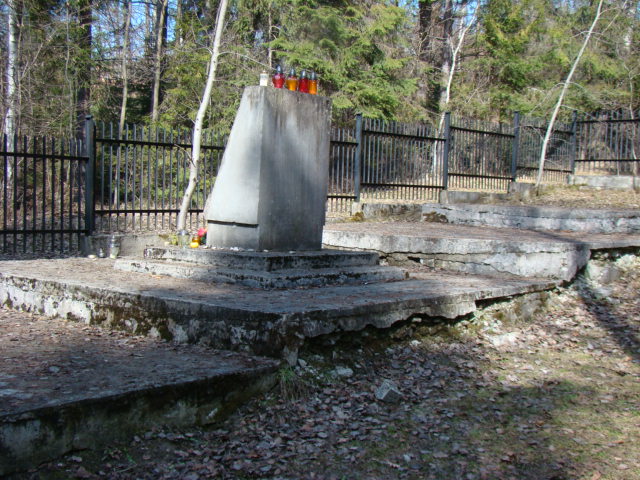
 The nuns of the convent, understanding that this was not right, at their own peril, somehow took the bodies up the hill into the woods and buried them with respect.
 Our group follows Shalmi up the hill into the woods to discover the gated cemetery that was constructed when communism fell in 1989 to mark the site of the graves.

 We have no idea how many bodies are buried here, but in 1989, the end of the communist rule in Poland, a man named Leo Geteterer funded a gate with a Jewish Star of David, enclosing the cemetery with a wrought iron fence.



 We are happy tourists who ride the funicular up the mountain, take many pictures, ride the ski lift down,and spend another hour or so shopping and eating excellent Polish kielbasa, soups and pierogies.


 As Alexandra Zapruder says in the introduction to Otto’s diary, “. . .the diary paints a picture of a group of people who exhibited a whole range of human conduct, including altruism and generosity, indifference and opportunism, impatience, selfishness, and cruelty, and whose conduct itself shifted and changed over time, defying all attempt at simplification or generalization.”


